Showing posts with label Philippines. Show all posts

Saturday, August 5, 2023

フィリピンのマルチリンガル教育の優れた点と、その落とし穴

 フィリピンは、100以上の言語がありますが、「母語ベースのマルチリンガル教育(MTB-MLE)」という、世界でも先進的な初等教育ポリシーを持っています。これは優れているが、実は落とし穴もあります。

この政策の背景には、試しに英語やフィリピノ語ではなく各地の子どもたちが家で話している言語で教えてみたら、算数などの教科の成績が上がったというデータがあります。当たり前といえば当たり前の話です。それで、政府が20ぐらいの言語をピックアップして、教材を作り、小学校の最初の2,3年ぐらいをそれで教えられるようにしています。これによって、学習の効果が実際にアップしています。その後は、段階的にフィリピノ語へ、そして英語へとシフトしていきます。これは世界でも稀に見る進歩的な政策です。

あまり語られませんが、実は、この政策には落とし穴もあります。政府が選んだ20の言語以外の言語を母語とする子どもたちとその先生方は、これまでにも増して多くの言語を学ばなければならないことになり、負担が逆に増えてしまいます。また、それまで標準変種がなかった言語でも、教科書を作るために、どこかの方言をピックアップする必要があります。それ以外の方言を話す子どもと先生たちは、「こんなの俺たちの〇〇語じゃない;直接フィリピノ語(ひいては英語)を学んだほうがまだ楽だ」となってしまいます。

じゃあ、解決策は?全部の言語と方言で教材を作れば、といっても、それには滅法お金がかかります。というか、不可能ですよね。フィリピンは潤沢な教育予算で知られる国々の一つではありません。(ところで、今、ほぼ単一言語となっている国でも、過去には当局が高圧的手段でその主要言語を強制し、もしくは人々が主体的にその言語にシフトし、その他の言語たちが消滅に追い込まれたという歴史があります。)

そもそも、インフラや教員養成がちゃんとしていれば、媒介言語はあまり関係ないという考えもできます。例えばシンガポールは、家で何語を喋っているかに関係なく、全員が初等教育から英語のみで学ぶことが強制される、一見無茶とも思える制度です。それにもかかわらず、学力は世界一の部類に入る高さです。インフラと教員養成がちゃんとしているからです。(そういうのを整備するお金があった、ということでしょう。)

となると、言語環境主義のように、「多様性万々歳」なのか、もしくは、やはり日本や韓国みたいに、ほぼ全員にとって家で喋る言語と、学校で授業を教わる言語と、パソコンのOSと、本屋で暇つぶしに立ち読みする雑誌の言語が一致している(を一致させる)方が理想的なのか、という哲学問答になってきます。

言語復興などに積極的な先生方は、自分のグループの言語を持つことはポジティブなアイデンティティにつながるので、たとえ自分の方言と違っても、学校で教えることに決められた変種を受け入れるべきだ、と言っています。私は、それでは上から強制された国家語や地域共通語を教授媒介として受け入れるのと、規模が違うだけで本質的には同じじゃないか、と思います。私はこれを、「マトリョーシカ問題」と呼んでいます。

具体的に言うと、こういうことです:パナイ島のある村の小学校の先生が、「現地で喋っているヒリガイノン語とは違う、バコロド市で使っているヒリガイノン語で書かれた教科書を作ってやったから使ってくれ」、と言われれるのと、「国語はフィリピノ語なんだから、北はバタン諸島から南はミンダナオまで、全国で使われているのと同じフィリピノ語で書かれた教科書を使うように。問答無用!」と言われるのは、規模は違っても、本質的には同じことなんじゃないか。

グループ同士の違いのほうが個人間の違いより大きく、異なるグループ同士は利害が衝突している、という考えに基づいた政策の下では、結局、村の先生と子どもたちの負担が増えることになります。「君たちは〇〇語を話す〇〇人である」というのが、上から押し付けられるのには変わりません。また、本人や親が、「いや、将来的に有利だからフィリピノ語(英語)話者のコミュニティにシフトしていきたい」と思っても、簡単には認められないことになります。これは、世界中のマイノリティ言語復興運動が直面しうるジレンマであると言えるでしょう。(主要言語へのシフトがすでに完了し、マイノリティ言語が生活言語として復興する望みはもうないが、文化尊重の象徴的ジェスチャーとしてその教育が行われているところでは、この限りではありません。)

Monday, March 6, 2023

An inevitable consequence of applying monolingual assumptions to multilingual societies

This interesting article points out that Manobo languages in Mindanao are being lost to Cebuano, not to English or even Tagalog. It reports that people prefer to read the Bible in Cebuano and find the versions in their own languages "too difficult to read." It then challenges the age-old and mainly protestant claim that the Biblical messages are best conveyed in one's mother tongue.

Well, I would say such assumption derives from the linguistic nationalism arguments dating back to the Europe of Luther and Herder that needed to promote monolingualism. It fails to take into account the fact that Filipinos always code-mix and that one's primary language shifts over time and from domain to domain. That's why bible translations in a "pure" form of vernaculars are not so popular except in well-established ones like Tagalog, Cebuano and Ilocano. They sound "unnatural" with so many lengthy and unfamiliar words! They don't resemble the code-mixed form of the language they use in their everyday  lives!

Likewise, it's little wonder that some people prefer to read the Bible in English rather than in their own language. For me personally, too, colloquial translations like the Good News Bible (Today's English Translation) is far more readable than the predominant one in my language (New Interconfessional Version) which used formal register. Thanks to the GNB, my elementary-school-age daughters have access to the word of God. They will have to wait until at least after high school to have access to the formal register and unfamiliar kanjis in the Japanese bible. 

Monday, July 18, 2022

Do Taiwanese speakers consider themselves Hokkien speakers?

Taiwanese Hokkien speakers in Taiwan, despite speaking substantially the same language, do not normally consider themselves to be belonging to the same speech community as the Hokkien speakers in Southeast Asia and Fujian Province in China. The reverse is probably also true, seen from the fact that Hokkien speakers from the Philippines customarily use Mandarin to communicate with Taiwanese speakers, despite their respective languages being mutually intelligible.

Sunday, April 10, 2022

絶滅した台湾シラヤ語を復活させようとするフィリピン人 A Taiwan-Philippine couple trying to revive Siraya

日本語は下に

When Martin Luther translated the Bible into vernacular, he had to choose one particular dialect of a Germanic dialect continuum. Thanks to the printing press, a lot of people read this Bible, even though what they spoke may have been different from the dialect used in it. Later on, that dialect developed into standard German. 

Protestants seem to have a "one language, one Bible, one nation" ideology. That's partly how the big European dialect continuum eventually became separated into established "national languages" like French, Italian, etc. That's also why western protestant missionaries had to make Bible translations in different dialects of China. But when they did that, just as in Europe, they also had to choose one particular dialect; in most cases, that of the major city in that area. For example, for Southern Min, they chose the dialect of Amoy, a hybrid dialect between Choan-chiu and Chiong-chiu dialects, which is still used in Bible translations in Taiwan. 

The article I share here is about a Taiwanese Pepo and Filipino Visayan couple who are working very hard to revive Siraya, an extinct Pepo language. They are quoted as saying they're doing it because Martin Luther said every person should be able to worship in the language of his own people. I think Luther wanted every people to be able to read the Bible in their "heart language." But when you have grown up speaking Taiwanese Hokkien and Taiwan Mandarin, aren't these your "heart language" already? 

シェアした記事は、今は 絶滅した台南のシラヤ語を、17世紀のオランダ人が訳したマタイ福音書を使って復興し、小学生に教えているフィリピン人の話:https://www.twreporter.org/a/taiwan-aborigines-siraya

マルティン・ルターが、みんなが自分の言葉で聖書を読めるようにと言って、聖書が民衆の口語に訳されたが、全部の方言で印刷しても印刷屋が儲からないので、主な町の方言を選んで訳した。それが、プロテスタントの「一つの言語、一つのエスニシティ、一つの聖書」という考えにつながっていると思う。それで結局、方言のグラデーションのようだったヨーロッパが、国家語ごとに分かれるようになった。

いろんな方言が混在していても、ヨーロッパの宣教師が辞書や文法書、聖書の訳を作るとなると、どこかの方言を選んで標準化する必要が出てくる。閩南語の場合は、泉州語に漳州語の要素が混入したアモイ語だった。これが台湾にもたらされて、日本時代の終わりまでは台湾語の事実上の標準語とされた。(それはたまたま台北方言にそっくりだった。しかし今、台湾の教育部が標準語扱いしているのは台南・高雄の台湾優勢腔。)

上の記事では、「シラヤ人である私達は、今、台湾語と北京語しかしゃべれないが、自分の民族語で神を賛美できるようになる必要があるので、シラヤ語の復活に尽力することにした」という意味のことが言われている。ほぼ全員が北京語を解するのにもかかわらず、必ず閩南語と客家語で次の駅のアナウンスをする台北市の公共交通機関に乗るたび、マルティン・ルターを思い出す。

Monday, November 1, 2021

Ruins of Todos Los Santos in San Salvador (Keelung)


The post city of Keelung used to be called San Salvador when it was under Spanish occupation. Several years ago, archeologists found the ruins of the Dominican Church of All Saints (Todos los Santos) under a parking lot. They also found human remains and some items including a cross. It was here that Japanese Dominican missionaries from Manila were formed before being sent to Japan only to be martyred there. All the saints, particularly the Dominican missionaries who worked evangelization of Japan, pray for us!

By the way, had the Spaniards not been kicked out by the Dutch, Taiwan would have been part of the Philippines today. The local Basay language belongs to the Malayo-Polynesian (Austronesian) language family and shares many similarities with Philippine languages. For example, "ulan" means rain in both Basay and Tagalog! Besides, the Spaniards brought in many Kapampangans from central Luzon to fight against the invading Dutch. And even today, there are many guest workers from the Philippines all over Taiwan, including Keelung.

Friday, August 27, 2021

台湾語と福建語

東南アジアの人が「福建語」と呼んでいるのは、福建省南部の泉州地区と漳州地区の言葉がいろいろに混ざったものです。フィリピンは泉州寄りで、ペナンは漳州寄りです。


福建省南部の港町アモイはイギリスの拠点だったので、周辺から人がたくさん集まって、この二つの地域の言葉が(割と泉州寄りに)混ざりました。キリスト教の宣教師は聖書をこのアモイ語に訳したり、辞書を作ったりしたので、ある程度標準化しました。福建省の中では少数派の言語なのに、Hokkienといえばこの言語を指すようになったのは、イギリス人のおかげです。


台湾北部の台北盆地やシンガポールは、アモイと泉漳両語の混ざり方が似ていた(どちらかというと泉州寄り)上に、イギリスの宣教師が訳した聖書も入ったので、アモイ語とほとんど同じ言葉をしゃべるようになりました。日本人は台湾を領有したときに台北を拠点にしたので、台湾語の辞書や教科書はこのアモイ語そっくりな台北の言葉になりました。今でも日本で売っている台湾語の教科書は、ほとんど台北よりの単語や発音です。


台湾では、地域によって、泉州寄りの言葉を喋っているところ(主に西部の海沿い)と漳州寄りのところ(西部内陸部と宜蘭)があります。南部の台南や高雄は、この台湾中の言葉が、割と漳州寄りに混ざって、新しい台湾語が発展しました。これが台湾の教科書やマスコミで使われている台湾語で、民主化時代以降、兵役や政治運動を通して男性を中心に広がりました。


東南アジアと台湾の福建語の違いは、もともと福建になかった西洋的や近代的なものや概念を、何語から借りたかです。マレーシア・シンガポールではマレー語と英語から、インドネシアではオランダ語から、フィリピンではスペイン語から、台湾では日本語から借りました。例えば、スーツのことをフィリピンでは「アメリカーノ」というのに、台湾では「セビロ」と言います。ただし戦後は北京語教育が普及したので、北京語を福建語読みした「セーツォン」もよく使われます。


香港やマカオには、インドネシアから移って来た華人がいっぱいいて、年配の世代は今でも福建語を使っています(子供たちには北京語で話しますが、結局彼らは広東語のモノリンガルに育ちます)。


違いはあるけれども、私はマレーシアやフィリピンに行って台湾語を喋って、ほとんど不自由なく通じました。実際、北京語以外の中国語が禁止されているシンガポールでも、台湾のテレビドラマの録画が、年配の世代を中心に人気がありました。


台湾人の中には、「台湾語」というからには台湾でしか通じないのか、と思っている人もいるかもしれません。香港や東南アジアに買い物に行ったとき、普段台湾で子供や外国人に聞かれたくないひそひそ話をするときに台湾語を使う癖がついつい出て、台湾語を喋ってしまうと、何を喋っているのかバレてしまう可能性があるので気をつけて。


余談ですが、今、日本に住んでいる福建省出身の人の多くは、福州の近くの福清の出身だそうです。そっちの方(福建省の北東部)は、アモイ語とは似ても似つかない言語を喋っています。福建省の言葉なのだから、彼らは自分たちが喋っているのを福建語というかもしれませんが、東南アジアでいう福建語や台湾語とは全然違う言葉で、全く通じないのであしからず。マレーシアのサラワクや、インドネシアの一部で話しているやつと近くて、Hokchiu とかHokchiaとか呼んでいます。台湾が有効支配している馬祖諸島でもこれに近いものを話しています。厳密には、福清語と福州語は違うが、福清人は多くが両方のバイリンガルだとも聞きます。福建省ではこの言語を話す人のほうがアモイ語を話す人より多いそうですが、東南アジアではマイナーな言語で、一部の群居地を除いては、周辺でメジャーな言葉に吸収されているようです。


私は福建語の未来に悲観的です。台湾を含め華人社会全体で北京語教育や現地語教育・英語教育が普及して、福建語はお祭りの儀式や教育を受けていないお年寄りとの言葉になっています。マレーシアなどでは若者が復興運動をやっていますが、影響力が今ひとつです。福建では強制的な北京語普及が行われていて、アモイの子供は半数以上福建語を話せないそうです。


こうなると、福建語存続のカギは台湾です。台湾では民主化以来、マスコミでも多く使われ、小学校の科目にもなっています。ですからほとんどの人が多少できますが、ほぼ台湾全土で、台湾語だけを日常的に使っている人たちは、やはり田舎のお年寄りなどが多い印象です。台湾語の牙城台南市での調査でも、小学生はほとんど家庭で北京語と英語しか使っておらず、台湾語を使うのは学校の台湾語の授業のときだけでした。最近、台湾政府が打ち出した「バイリンガル国家2030」という政策では、バイリンガルが指すのは北京語と英語のことです。このまま行くと、アイルランドのアイルランド語のように、象徴的な存在になってしまうでしょう。例えば、中国と対抗する意識を強調したい政治家が、普段の私生活は北京語と英語で行っているのに、演説のときだけわざと台湾語を使う、といった具合です。


台湾で、もともとは上から押し付けられた外来言語だった北京語ですが、台湾人に半世紀使用されて台湾のことを表現できるように台湾化して、学校や役所で使う「頭の言語」だけではなく、「心の言語」にもなっています。


最近、日本ではこの北京語を指して台湾華語という言い方も出てきましたが、私や私の家族は、詳細をいちいち説明するのは面倒くさいので、周りの日本人たちに対しては、この台湾化した北京語のことを敢えて「台湾語」と呼ぶときもあります。福建系の台湾人だけではなく、一部のお年寄りを除いたほぼ全員の台湾人に通じるのだから、福建語よりも、もっと「台湾語」と呼ばれる資格があるような気もしないではありません。

Wednesday, May 7, 2014

Is it always better for children to be taught in their "mother tongue"?

Under normal circumstances, yes. But it seems to me that the medium of instruction is not always the sole problem. There are other factors like school infrastructure, teaching materials and teacher training.

English-medium (or French, for that matter) is often blamed for poor achievements in many countries. But there are countries where the medium of instruction from Elementary 1 is not necessarily the L1 of the students, and yet have very high academic achievements. Singapore and Taiwan are good examples. Enough support existed for lower-achieving students in those countries, compared to their poorer counterparts.

Of course, the ideal is that everybody gets to study in their own language. But in societies where there are many languages, it is not easy to prepare teaching materials in all of them. As those countries often happen to be poorer ones, a lot of money that goes into developing materials in many smaller languages may actually reduce the money that can go to improving school facilities and teacher salaries.

In the meantime, students who come from richer families will always do better, regardless of what language they are taught in. They have the means to avail themselves of better support. So even if a country changes the medium into a local language, they might be disappointed to find that the economically privileged kids still do better all the same.

Friday, May 2, 2014

Is a well-estabished community language an obstacle to second language learning?

I have heard some people say that the people in Japan, Korea and Taiwan are not as good in English as those in Thailand, Malaysia, Philippines, etc. because the national languages of the former are too well-established and don't allow room for English. It's obvious this theory doesn't stand. What about Sweden, the Netherlands, etc. where the "national" languages are well-established and standardized, but people are phenomenal in English? What about Thailand? I think Thai people are as proud of their wonderful language as the Taiwanese are about Mandarin, and as insistent in using it to communicate with any foreigner who even has a tiniest bit knowledge of it, and yet do quite well in English? Conversely, what about Malaysia, which had once succeeded in codifying its national languages and even made it the sole medium of instruction in tertiary education in the 1980s, but then turned back to English afterwards?

But it is useful to know that for the majorities of people around the world, their "mother tongue" is not the same as the one that's taught in schools. Cases like Japan and Korea, where most people speak the same language at home and school and work and everywhere else, are really rare. It is a highly artificial situation, influenced by the nation-state ideology originated from Europe, i.e. France. It took many years and much effort on the part of the government of Japan, for example, to eliminate all "dialects" to arrive at the perceived "monolingual" state of today. In many countries, there are many languages that are spoken but not standardized enough to be used as a medium of instruction at school. It is expensive to develop those languages and compile textbooks in them. And most of those countries are poor. So the teaching has to be continued in their former colonial language, usually English, French or Portuguese, because materials are more readily available. (The situation in most former Spanish colonies is a bit different, because Spanish has already become the native language of the majority of people.) This creates many problems, of course. One is that it unfairly advantages rich people in urban areas, who have more access to English. (Or French for that matter.) And studies overwhelmingly show that people learn better when they are taught in the language they speak at home, or the one that's widely spoken in the community.

That leaves us with the discussion of the countries that have chosen one of the local languages as the national language. These countries can be classified into two types, I think. The type one are those which have already successfully developed and propagated that language, so much so that other languages originally used are dying out. The other are those which have taken more laissez-faire approach. Thailand is one example of the former. The government has standardized the language and developed enough vocabulary, so almost everything can be done in midland Thai. Many non-Thai speaking peoples first became bilingual in their own language and Thai, and then the young generation grew up knowing only Thai. Politically, Thai was propagated as the symbol national unity. So people started to feel very proud about this language. Minority languages became more marginalized, or even died out.

An example of the latter is the Philippines. Even though the constitution says English and Filipino are official languages, and bilingual elementary education in a local language and Filipino are propagated, it's largely up to each individual to choose which language to do what. As a result, a child from a upper middle-class Manila family may grow up speaking English or "Taglish" as his home, school and community language, all at the same time. On the other hand, another child from a remote area might speak his mother tongue at home, a regional lingua franca like Cebuano to be his community language, Filipino and English as his school languages. Obviously, under normal circumstances, it is so much harder for the second child to do well at school. Nowadays, because of the influence of the electronic media, Tagalog seems to be the winner in this laissez-faire competition. Even people from very remote places can now speak at least some Tagalog. Overseas Filipino Workers who have different first languages also seem to use Tagalog as the lingua franca once away from home.

Now which one is Taiwan, anyway? I think Taiwan was on the way to Type 1, then turned Type 2, but it's too late. During the authoritarian era, the government tried to eliminate "dialects" and promote Mandarin. The high-handed method of giving "dog tags" for those who didn't conform to this rule is notorious. When Taiwan was democratized, it moved on to a more laissez-faire style, with a renaissance of non-Mandarin languages, especially Hokkien and Hakka. But I think it's a bit too late. Very few of my students can converse fluently in Hokkien. Quite a few of them don't understand any at all, even if they are ethnically Hokkien. It's paradoxical, because those are the guys who went to elementary schools when "Mother Tongue" was already a compulsory subject. Hokkien might go down the way of the Irish language in Ireland. Significant things can be said only in English there.

I want to talk more about medium of instruction issue. I hope I'll get to doing it soon.

Sunday, March 2, 2014

Will someone's "mother tongue" always be the language he's best at?

Not so, perhaps for the majority of people in the world. "Shifting L1" is a natural and common phenomenon. It means that your primary language shifts from one to another over time. For example, my wife was monolingual in Taiwanese Hokkien before she entered kindergarten. Her parents only spoke Taiwanese Hokkien at home. But after she started schooling, she became proficient in Mandarin. It was back then when the use of so-called "dialects" were discouraged in schools. She always chatted with her friends in Mandarin. So, soon, Mandarin became her dominant language. Now, although she can understand Taiwanese Hokkien with no difficulty, she's not very confident in it either; except for some limited purposes, such as chatting with elder members of the clan, or shopping in traditional markets.

The majority of people in the world live in multilingual societies. In such societies, the language you speak at home may be different from the dominant language of the particular location they live in, which may again be different from the official language or national lingua franca. For example, Juan, a Filipino adult, comes from an Ilonggo family. His parents spoke Ilonggo at home when he was a young child, so you may say that his "mother tongue" is Ilonggo, which is a regional lingua franca in some provinces in the central Philippines. However, his family lived in Manila, so none of his classmates spoke Ilonggo. They spoke "Taglish" (A mixture of English and Tagalog, the vernacular of middle-class manilenos). Soon, Taglish became his dominant language. But as the school he went to was a prestigious private school where people mostly spoke English only, so by the time he graduated from college, English became his dominant language. He can still use Tagalog to conduct casual conversations, but he can't really talk about all topics in straight Tagalog. Moreover, he has forgotten most of his Ilonggo, except some basic expressions. So does it still make sense to say that his first language is Ilonggo? And does it make sense to say that he's a non-native speaker of English, when it is the language he is most proficient in, even though he obviously does not sound like an American when he speaks it (in fact, he has a quite strong Philippine accent)?

Friday, June 14, 2013

Rhoticity in Hong Kong English: A Philippine influence?

I've wanted to write about this for a long time, but never found the time to do so.

I found this study about rhoticity in Singapore English (http://www.icphs2011.hk/resources/OnlineProceedings/RegularSession/Tan/Tan.pdf). In a nutshell, it found that many people in Singapore consider rhoticity (pronouncing the /r/ in words like "car" and "cart") to be a sign of good education and higher social status.

I was wondering about this for a long time. When I was living surrounded by Singaporeans about 20 years ago, none of them had a rhotic accent. Then I came across some very fashionable Malaysian students who tried to sound rhotic, seemingly in an attempt to appear "Americanized" and "cool". And recently, I started listening to Singaporean talk shows on internet radio, and noticed that more and more seemingly "upwardly mobile" people, especially female, are starting to "roll the r".

This is interesting because, from what I know, in southern England, having a rhotic accent is considered a sign of being a country bumpkin rather than hip and cool. (You sound like you are from Ireland or West Country or somewhere like that if you pronounce the "r". Even people in Lancashire don't do that anymore, you know!) So this is another sign of increasing dominance of American English even in traditionally British-oriented outer-circle Asia (minus the Philippines, of course).

Now, when I attended the IAWE conference in Hong Kong last year, there was a linguist from Hong Kong saying that some younger Hong Kong speakers are going rhotic due to the influence of the American media inputs. This is hardly surprising because many of the DJs and personalities on English channels of RTHK have north American accents. And if I'm not mistaken, among the expat communities in Hong Kong today, there are more Americans and Canadians than Brits.

I asked him if this could also be because many Hong Kong families hire Filipino helpers to take care of their children. In fact, quite often, those helpers are the only people with whom many Hong Kong children converse in English, so it would not be a surprise if Hong Kong youngsters picked up the Philippine rhotic /r/ from them, even if they are still taught the non-rhotic RP at school. But the linguist in question categorically denied this possibility. I was not quite convinced. Maybe some research is needed.

Friday, February 1, 2013

Trilingual medical personnel in Taiwan

Medical personnel in Taiwan are at least trilingual. At the physical theapy room in a hospital where I visit twice a week, the language I hear most often is Taiwanese Hokkien. This is because most of the patients are elderly. The therapists communicate with them in Hokkien, of course, but I can tell that many of the young therapists are not very fluent in it. They must have grown up speaking almost exclusively Mandarin like other young people in Taiwan, and received special training in Hokkien to deal with Hokkien-monolingual patients. When they converse with other therapists regarding something they don't want their patients to overhear, for example someone's medical condition, they switch to English (Another instance of the boundary between the Outer and Expanding Circles being blurred). This is normal because medical training in Taiwan heavily use English. Aside from this, many doctors and nurses can speak Japanese as well.  I also know of some Filipino doctors practicing in Taiwan who are multilingual in this way. (They can speak Mandarin, Taiwanese-style Hokkien, as well as English, Filipino, Philippine-style Hokkien and perhaps even one more Philippine language!) I also know of a second-generation mainlander who had aspired to become a doctor in Taiwan, but gave up because of her failure to master Hokkien. It's difficult being a doctor in Taiwan and unable to speak Hokkien, because many patients are elderly.

Friday, December 14, 2012

Before departure to China: IAWE conference in Hong Kong and Guangzhou (Day 3-1)


I woke up early in the morning to take a stroll in the public park behind Alan's house. I think the Brits did a good job in planting trees all over Hong Kong. Across the border in China, many hills are just bare rocks. Those in Hong Kong must have been the same, since they share the same climate, and they are just a few kilometers away from each other. The vegetation can't be that radically different.

The park has Chinese herb gardens and walking trails with Chinese qigong and 養生 theme. It is very tastefully done, and far better than fake Euro-Japanese style often seen in Taiwan. 

Hong Kong style, early morning. I saw some old Indian ladies practicing taiji. The old taiji master spoke English. He must have taught many non-Chinese Hong Kong residents.

This is the building in which Alan's flat is.

Don't know which flat, though...

At the top of the hill in the park, there is this pavillion. I did my morning prayer there.

Down the hill towards Chinese herbal garden.

Despite the fact that the important highway connecting the international airport with the city center was right behind the park, it was very quiet there. It was a very nice park, and I think the government of Hong Kong is doing a very good job designing and maintaining public spaces. I wish Hakone-yama in Shin-okubo was as nice as this one...
 

After a healthy morning stroll, unhealthy breakfast. At a tea house underneath Alan's flat.

That tutorial center famous in Manila was also here. Not a single Chinese word written in all of the tutorial centers I found in Alan's flat, reminding of English-medium education in Hong Kong. They spelt "math" the Philippine way! (It should be "maths" in the Hong Kong style.) Could many tutors be from the Philippines, as in many other countries?

Despite the fact that teaching model in Hong Kong schools is still the RP, I noticed that more and more children there are sounding rhotic. Could this be Philippine influence? Although the Hong Kong presenter I met at the conference denied the possibility and attributed it to American influence through the media, it is still true that those kids in Hong Kong get most exposure to English through their Philippine yayas.
 

Every year, the same lunch at the City U! I skipped the western style lunch provided at the conference and went to Festival Walk to eat this. I feel that the price of food in Hong Kong to be about the same level as Tokyo.

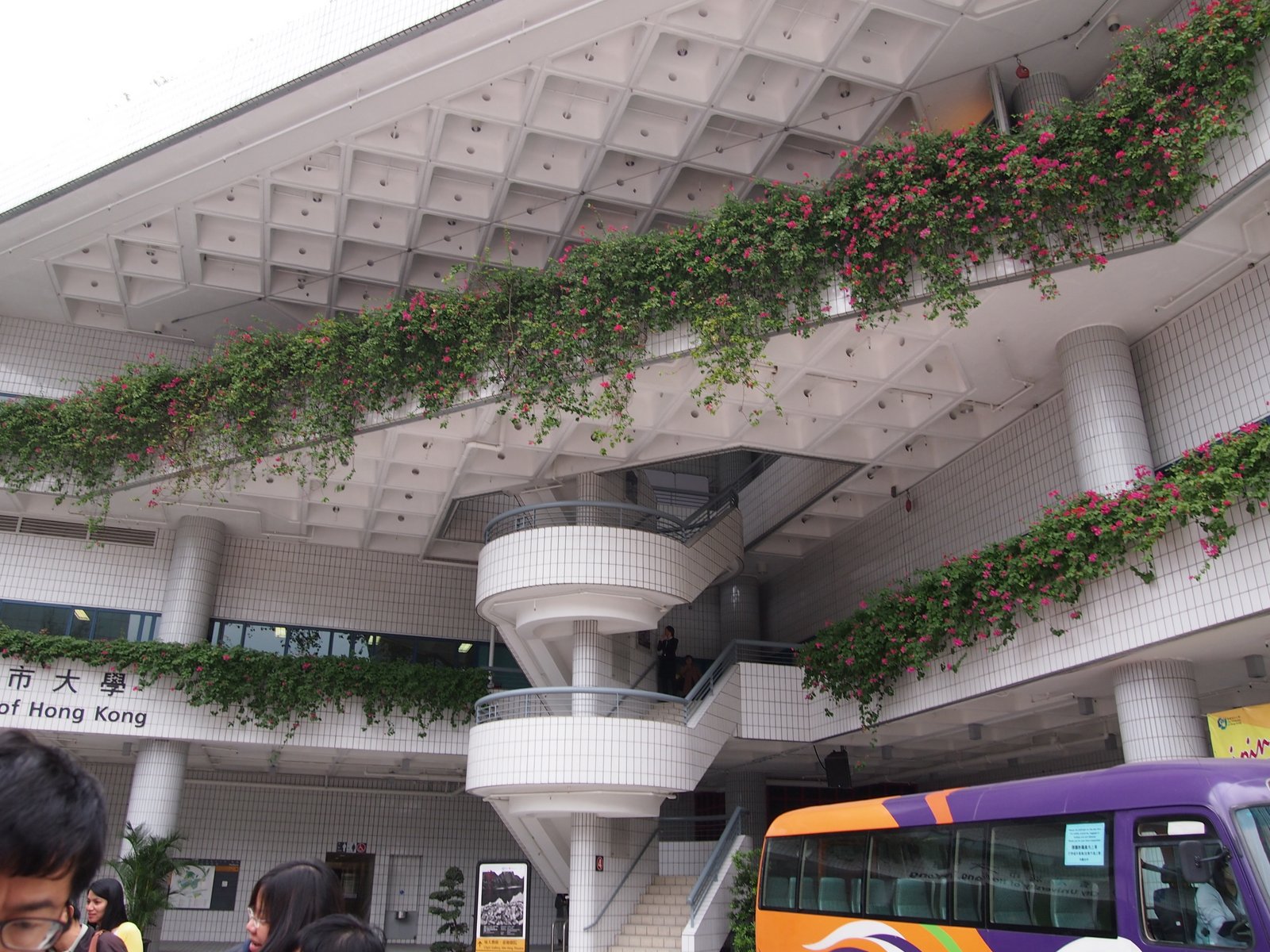
At the back gate of the City U, awaiting coach to China. Coaches in Hong Kong and China looked much more trustworthy than those we see here on Taipei roads, at least on the surface. No amateurish paintings of fake Donald Duck and Doraemon next to a Chinese fortune god, nor unpronouncable Chinese transliterations, different on the both sides despite the same Chinese name, on the body.

Now, off to China! Professor Moody of Universidade de Macau explaing the immigration requirements. People were wondering why on earth only the Japanese and Singaporean passport holders were not required a visa, when even those Macau residents holding US/European passports needed one. I felt the strong link between Japan and the People's Republic, despite all the recent fuss.
Posted by Picasa

Wednesday, August 15, 2012

Rhoticity makes you sound more fluent? From a former non-rhotician


It was so interesting I just couldn't stop.

Since I can't post my comments there, I will answer the question here, then.

I used to sound non-rhotic, but now I'm more rhotic. I'm a Japanese person teaching English in Taiwan. My original accent was non-rhotic, because Japanese English is essentially non-rhotic, and I was taught British English. Most of my friends when I lived in northeastern England were from Singapore, Malaysia and Hong Kong, all of whom were non-rhotic (unless they were faking an American accent or something).

But I went rhotic after I came to Taiwan. There are several reasons to that. First, in Taiwan, rhotic seems to be the prestige accent. I once saw a book that taught KK音標, and it said you should pronounce the rolled /r/ because it will make you sound more . (Actually, this is one of the reasons why many non-rhotic foreigners think Taiwanese people sound caricature American.) People thought my accent was 不標準 when they heard my non-rhotic English and concluded it was because I was Japanese, not because I was trying to sound British. Third, Jennifer Jenkins said rhotic was more intelligible in lingua franca communication. I guess that's true, because we Asians generally learn how to spell English words before we learn how to pronounce them. It seems more "logical" to me to insert an r sound when there is an r in spelling. And in RP, there is the inconsistency of having to pronounce the r when the next word starts with a vowel. Lastly, I lived in the Philippines for almost three years and have lots of Filipino friends. In the Philippines, people, especially those with lower English proficiency, have difficulty understanding you if you sound non-rhotic, perhaps because you sound so different from the way they are taught what English words sound like.

I do sound a lot more non-native when I sound rhotic (maybe because it was in the Philippines that I learned to sound rhotic), but my students seem to understand me much better when I sound rhotic. This is probably because they're familiar with what I call the "KK音標-inspired accent". And it doesn't matter if I sound non-native, not least because they thought I sounded non-native even back when I was trying to sound as British as possible in class, probably because of my Asian face and Japanese surname. (Besides, we all know that native speakers are only a minority of English speakers.)

I have noticed, though, I subconsciously switch back to non-rhotic in several situations. First, when I'm having very relaxed conversations with, say, my wife, I turn non-rhotic, because that's my original accent in the first place. I also turn non-rhotic when I have to "impress" someone with my "high class" British accent, especially when I have to talk to a teacher who, I feel, looks down on me because of my non-nativeness. (Isn't this the use of Bourdieu's "linguistic asset"?) Also, I tend to suddenly turn non-rhotic when talking to a non-rhotic interlocutor, for example, a Briton, perhaps as accommodation strategy. I sometimes notice that I’m speaking non-rhotic when conversing with other rhotic native speakers or fluent L2 speakers, probably because I know that they have high proficiency and subconsciously think that they shouldn’t have any problem deciphering me.

Consequently, the best place to hear me sounding rhotic is classrooms.

The dilemma is: I sound rhotic because I think students can understand me more easily; but students may think my English is limited because I sound more non-native when I’m rhotic.

One solution would be for me to pick up a native-like American accent. But I really can’t imagine myself doing that. I used to dislike my classmates who had an American accent and used to label them as fake Americans. And I don’t want to be a target of a terrorist attack when visiting some Islamic countries. 

Wednesday, May 16, 2012

Ode to "non-native" Englishes


We are not native speakers of English. So we don't sound like one. And we most likely never will, if we don't sound like one by now. But that's OK. There's no need.

There are more non-native speakers in the world than there are native speakers. So we are more likely to be using English with other non-native speakers than with native speakers (unless you immigrate to the US or get a job at the British Embassy or something). It is certainly the case with me. Few of my friends with whom I use English are native speakers (except my colleagues at school). I attend an international church where English is the practically the only language used, but very few in the congregation are native speakers of English. They seem to understand my Japan English without much difficulty.

It is probably not true that native-speaker varieties of English are the most widely understood. There are quite a few studies which found out that native-speaker varieties were actually harder to be understood in international communication. And I have attended many international conferences and meetings where native speakers were the only ones having trouble understanding and being understood. It's not hard to guess why. Many of them are so used to speaking in English that they speak so fast, and they don't enunciate clearly. And they use many local idioms and slangs that may be common in their own countries, but not outside. Some of them probably put the blame for communication breakdowns on the fact that our English is "not up to the standard". We know from studies that such an attitude interferes negatively with one's ability to understand.

Aside from being understood more easily in international communication, there are other benefits to sounding non-native. I feel more comfortable and psychologically stable when people can tell from my accent my cultural background. This way, I don't have to try to pretend to be someone else. It is tiring to sound like a native speaker. It is even worse sometimes even imitating native speakers' mannerisms, facial expressions, etc. (I think many fellow non-native teachers agree with me.) It is a futile effort. And it makes me feel stupid. Besides making me feel as if I was a copycat monkey (物まね小猿) in the English-speakingdom, it actually does make me sound more stupid, because I can't pay much attention to contents, grammar and lexis when I have to pay so much attention to native-like pronunciation.

Another thing is that it is dangerous nowadays to be mistaken as a native speakers of English in certain countries, especially in the Middle East, etc. But this is a sensitive issue, so I won't talk about it here then.

OK, so if we don't need to try to sound like a native speaker, how can we raise our success rate in international communication with other non-natives? Here are my thoughts.
From my experience, it is important to pronounce the words clearly. You should almost sound like "spelling pronunciation". This will certainly slow down your speech. You will also sound less "native-like" and more "foreign" to native ears. But that doesn't matter. People from different countries will understand you better.

Studies found that "syllable-timed" accents were easier to understand for non-native speakers. Syllable-timing means you give almost equal stress to every syllable in a word. So you sound like "cohn-grah-choo-lay-shee-ons" when you say "congratulations". Many proficient non-native speakers of English have syllable-timing. Yet, syllable-timing is one thing that will make you sound definitely non-native. You may feel you are less "cool" when you sound less like an American. But you have to realize that you will never sound completely like an American no matter how hard you try anyway. (Unless you have some special talent, that is. And if you do, you should perhaps consider becoming an actor.)

I think one of the reasons why "spelling pronunciation" or "syllable-timed" accents are easier to understand is because, especially here in East Asia, we learn how to spell and read English before we learn how to speak it (if we ever do)! When I was learning English as a young student, I always felt frustrated that English words never sounded like how they are spelt when pronounced by native speakers.

Another important thing is more of a psychological factor. It is called accommodation. It means you have to accept that people have different accents, and be willing to try hard to understand people with "unusual" or unfamiliar accents. This can happen only if people are constantly exposed to people with many different accents. The opposite happens when people are exposed only to limited varieties of accents. For example, many Taiwanese students are familiar only with a kind of American accent. So they may mistakenly think that is the only "standard" accent of English. And when they come across someone with a different accent, they naturally find it difficult to understand. This is usually because they subconsciously blame the other person for not having what they think is the "standard" accent. This causes them to give up efforts to understand too easily. The problem can be solved easily by constantly exposing learners to different accents.

It is encouraging to know that in many countries, like the Philippines, people are "functionally native" in English. It means that they use English among their own countrymen in certain domains. Even though the way they use English may be different from that of, say, Americans, and occasionally get laughed at for that, it nevertheless functions perfectly well as a lingua franca in those domains.

I often use English with my fellow East Asians including Koreans and Vietnamese, because it is often the only language we have in common. And it is very helpful that they find my Japanese rhetorical style and cultural references very similar to their own. The communication would be much more problematic if I spoke with an impeccable British/American English. Well, Asian Englishes is another topic so I will write about it some other time, then.

Monday, July 11, 2011

Partnership Center: マニラでおすすめの宿 馬尼拉推薦住宿


I wrote about this place before, I will do it one more time.

Phildhrra Partnership Center near Ateneo de Manila University in Quezon City is the place I stay whenever I come to the Philippines.

前にも書いたのですが、Phildhrra Partnership Centerが僕のマニラでの定宿です。

ケソンシティのアテネオ大学の付近にあります。

以前也寫過了,我想再度推薦Phildhrra Partnership Center. 它位於葵松市(奎松市)馬尼拉亞典耀大學附近。我每次來馬尼拉都固定住這裡。

Manila is not known for being the safest city in Asia, but the Center is located within a walled subdivision, so it is generally safe and quiet.

マニラは安全な街とは言いがたいけど、この場所はガードマンがいる検問所がある住宅地の中なので、とても静かで、外側の宿泊施設より断然安全です。

雖然馬尼拉並不能說是一座安全的城市,但這個地方是被圍起來的社區之內,所以比起外面的設施安全很多,而且很安靜。

Its staff members are friendly and helpful. They sometimes really go out of their way to accommodate your needs. True hospitality, I would say.

スタッフはとてもフレンドリーで、無理な頼みでも聞いてくれます。仕事というより、客に親切にすることを楽しんでいる感じです。

這裡的員工很親切。他們的態度不只是把招待當作工作來做,而是做得樂在其中。

The rooms are simple but clean. All rooms are equipped with air-conditioning, cable TV and shower facilities. They have single, twin and dormitory type rooms.

部屋は質素ですが、とても清潔で、毎日掃除してくれます。テレビ、冷房、シャワーが完備しています。シングル、ツインとドミトリーの部屋があります。

房間雖然簡單,但是很乾淨,而且每天都有清潔。備有電視,冷氣和沐浴設備。有單人房,雙人房和宿舍型房間。

They serve breakfast, lunch and snacks daily from Monday to Friday. Kitchen staff Bong and Elsa prepare good food that's really better than any outside food for better prices. During weekends, you will have to go to nearby Katipunan for meals, which is good for a change.

朝昼食と午後のおやつが出ます(別料金)。スタッフのボンさんとエルサおばさんが作る料理はとてもおいしいし、安いです。土日は休みですが、すぐそばのカティプナン通りにレストランがいっぱいあります。


供應早午餐和下午點心。員工Kuya Bong和Ate Elsa準備的食物很好吃,而且便宜。週六日休息,可是附近有不少家餐廳,所以無煩惱。

The rates are competitive, compared with similar facilities nearby. Special rates apply for longer stay. You can inquire the details.

料金は近所の似通った施設よりは安いです。長期滞在には割引があるみたいです。

費用比附近幾家類似的地方便宜。長期住客另有折扣。

So if you are planning a trip to Manila, I recommend you to look into making the Phildhrra Partnership Center your home away from home, which you can do from this website:
http://partnershipcenter.webnode.com/

マニラへ起こしの際は、ぜひPhldhrra Partnership Centerにご宿泊ください。お問い合わせはこちらから:
http://partnershipcenter.webnode.com/

如果打算到馬尼拉旅遊,不妨考慮把Phildhrra Partnership Center當作您第二個家。要訂房可上他們的官方網站:
http://partnershipcenter.webnode.com/


Posted by Picasa


Monday, July 4, 2011

Adoration Chapel in SM MegaMall

The new wing of SM MegaMall. It just keeps expanding! Incredible!

The Chapel of the Eucharistic Lord and the Adoration Chapel on the top floor.

There was a big crowd so there were security guards on duty.

The big chapel was packed because the mass was about to begin.

There are seven masses a day. Chinese mass at 10am!

The perpetual adoration chapel was very quiet and comfortable.

What a difference from the rest of the mall!

Of course, after adoring the Most Blessed Sacrament, you can enjoy shopping in such shops...

A big crowd of people came to have merienda after mass. I had Halo-halo Fiesta in a crepe!

It had caramel bananas, leche flan, ube and nagka ice cream, etc. in it.

The merienda was too filling, so I had a light supper at Chowking...

Lazhou hand-pulled noodles in SM MegaMall


I took a tricycle, LRT and then MRT to get to SM MegaMall in Ortigas. Very convenient!

The main purpose is to visit "Mey-lin Lanzhou Pot & Noodle House", but another thing that interested me was Pepper Lunch.

But it was under renovation. Sayang!

MegaMall is huge. So I asked at the information counter where the Noodle House was. They showed me the directory.

"Lanzhou?" No.

"Mey-Lin?" Nope.

It was not listed.

So I looked through all the Chinese restaurants. "Pot & Noodle House?" Sounds more like it.


Sure enough, it was Lanzhou hand-pulled noodles. It is in the middle of art gallery area on the 4th floor of A-block.

Appropriate for appreciating the art of lamian.

The menu was rather Taiwan-conscious...

蚵仔麵線? 台南擔仔麵? You wouldn't get those things at mainland style noodle houses in Taiwan.


I ordered "8 Treasure Noodles (八寶炸醬麵)"

It was Taiwan style!

Very satisfactory... \(^^)/

Not the northern Chinese style that you get at Lanzhou Lamian in Binondo.

I think the main difference is that Taiwanese 豆瓣醬 is made of soy beans unlike that in mainland China that is made of 蚕豆.

So Taiwanese 炸醬 tastes sweeter, just like Japanese 八丁味曾!

Also, they seldom put dried tofu cubes in 炸醬 in China. But it is a must in Taiwan!

Wednesday, June 22, 2011

英語は金持ちの言葉?


前にもフィリピンの言語について書きましたが、また書きたくなったので。


フィリピンを旅したことある方なら、看板や標識はほとんど英語しか書いていないことに気がついたでしょう。公用語は英語とフィリピノ語2種類のはずなのに、公式文書はなぜか英語だけ。ところが、街中で、フィリピン人同士が英語だけで会話しているのは、学校や役所、金持ちの地域以外ではあまり聞かないでしょう。


読み書き、家族との会話、同僚との会話、学校の授業など、全部が一種類の言語でできる日本や韓国のような国は、本当に珍しいです。フィリピンもその例に漏れず、毎日いろんな言語を使う必要がある国です。


まず、家で話しているのは、地元の言語であることが多いです。こういう言語はたくさんありすぎるので、さらに、付近の大都市の言語が、異なる言語を話している人々の間の共通語になっていることが多いです。たとえば、セブ島近辺なら、セブ市で話されているセブアノ語を使えば、別の言語を話している人たちとも意思疎通が図れる、ということです。


さらに、国レベルでは、「フィリピノ語」というのがあります(実質上は、マニラ周辺の共通語、タガログ語と同じです)。小学校に入ると、初めてこれを勉強する人が多いです。でも、今テレビの人気番組はほとんどこのフィリピノ/タガログ語なので、大して苦労しなくてもこれをマスターするフィリピン人も最近多いです。また、何百万人というフィリピン人が海外に出て働いていますが、彼らが海外で、言語背景が異なるフィリピン人と会ったら、この言語で話すので、海外に出た結果フィリピノ/タガログ語が上手になるフィリピン人も多いです。


また、最近国の政策に変更があり、地元言語が復活することになったとはいえ、まだ実質的には小学校は英語とフィリピノ語のバイリンガルになっています。中学までにだんだんすべてが英語になっていくシステムです。


本屋にはほとんど英語の本しかありませんし、新聞も、大新聞といわれるようなやつは英語だけです。ラジオやテレビはフィリピノ語や地元語が有力なので、フィリピン人がまとまったモノを読むときは、ほとんど英語しか使わない、ということでしょう。(以前、台湾にいる高学歴のフィリピン人に、フィリピノ語で書かれた本をあげてもあまり喜ばれないことがありましたが、彼らが読むのはもっぱら英語なのです。)


(東南アジアのほかの国と同じように、「英語のおかげで学力が弱くなっている、英語は科目だけにとどめて、まず母語で思考能力を強めたほうがいい」と主張する言語教育専門家と、「英語はやっぱり大事だから早くから教えたほうがいい、他のいろんな地元言語を習得する暇があったら、英語をやったほうがまし」とする、言語教育には素人の父兄との間で、激しい対立があります。フィリピンの場合は、幸い前者が勝ったということです。これについてはまた別の機会に書きます。)


「大金持ちのフィリピンと貧乏人のフィリピン、この二つの全く異なる国が、同じ島々の上に共存している」とよく言いますが、これと同じことが、学校でも起こっています。


富裕層の子供は、幼いときから英語を話している子も多いし、親が英語を話す幼稚園に入れたり、英語のせいで勉強に追いつけないということがあれば、英語塾に通わせることができるので、英語を使う政策は、富裕層に有利、ということになります。


一方、地元語とフィリピノ語しか上手にはできない貧困層は、自分の国の法律はおろか、普通の本や新聞もろくに読めない、つまり一生出世できない、ということになります。英語が貧富の差の拡大に貢献している、という意見が専門家の間では根強いですが、一理はあるかもしれません。


だからと言って、新しい政策が決めたように、授業で使う言語としての英語を廃止して、すべてを地元語+フィリピノ語にすれば問題は解決するかといえば、そうもいえないと僕は思います。


フィリピンの公立学校の学力が上がらない原因は、英語にあるというより、設備、教材、先生の給料、子供が働き手として必要とされていることなど、経済的なところにあるのではないでしょうか?先生が自分で学校に机や椅子を持ってこなければいけないほど貧しいところがあるそうですから、もう英語なんちゃら以前の問題でしょう。


仮に、英語を廃止して、高等教育を全部フィリピノ語にしたとします。たとえそうしても、富裕層の子供はフィリピノ語でも貧乏人の子供より良い条件で勉強するはずですから、結局ギャップはあまり縮まらないのではないでしょうか?


また、逆に、経済条件が良ければ、学校の言語と家の言語が違っても、ちゃんと勉強できる、ということもあります。たとえば、シンガポールや香港では家の言語に関係なく学校ではすべて英語ですし、台湾も僕達ぐらいの世代までは、家ではほとんど「台湾語」か客家語で暮らしていたのにもかかわらず、学校の勉強は小学校から百パーセント母語ではない「北京語」です。それでも、この3つの「国」は、学力の面で、常に世界のトップクラスです。


初等教育を自分の言葉でやらないと知能的な発展に差し障る、という説は、学会ではほとんど常識になっており、正しいのかもしれませんが、シンガポールでも香港でも、表面上は英語オンリーということにしておいて、実際には子供たちは一旦母語に置き換えて考えているから、知能発展にあまり差し支えがない、ということも見逃されがちです。確かに直接母語でやったほうが、一旦英語に置き換えるより易しいかもしれませんが、国によっていろいろな事情(シンガポールの複雑な人種関係、香港の国際金融都市としての重要性、フィリピンのいろんな言語の教材を作る困難など)があり、みんなにベストのことがたやすくできるとは限りません。それに、一旦置き換えなければならない手間が、経済力でカバー可能な部分(たとえば塾に通わせるなど)でしょう。


フィリピンが、小学校で教授言語としてのを英語を廃止して、少なくとも3年生までは地元の共通語で教えることに決めたことは、一応喜ばしいことでしょう。看板や法律も将来フィリピノ語に変更できれば、富裕層以外の人たちにとっても公平です。でも、富裕層は政策を無視して、これからも日常生活で英語を使い続けるでしょうし、英語が社会的地位アップに必要な言語であるという客観的事情も、すぐには変わらなさそうです。言語教育に関する終わりのない対立で社会的資本を費やすよりも、公立学校をめぐる経済的状況を改善することが先決なのではないでしょうか。